Menu
Everything we know about ChatGPT Ads + Get First Access
The golden era of entirely ad-free ride is coming to an end. ChatGPT will soon start including ads for free users; a move that’s got the tech and digital marketing world buzzing.
“I kind of think of ads as a last resort for us as a business model. I would do it if it meant that was the only way to get everybody in the world access to great services, but if we can find something that doesn’t do that, I’d prefer that” – Sam Altman, CEO, OpenAI.
But sometimes, necessity trumps philosophy.
Despite ChatGPT’s massive user growth from roughly 1 million users per week at launch to an astonishing 900 million weekly active users, the company is facing a major challenge: revenue. Around 95% of ChatGPT users don’t use the paid version. This means OpenAI has been burning through cash to maintain its massive infrastructure. And since the company’s scale-up plans are immense; reports suggest up to $1.4 trillion in infrastructure investments over the next eight years, new revenue streams are essential.
This signals a huge opportunity for brands to leverage. For businesses and marketers, this could be one of the biggest shifts in the digital marketing landscape since the start of Google Ads or Facebook Ads.
The ChatGPT Ads First-Mover Advantage
For future-focused brands, ChatGPT Ads may be a once-in-a-decade opportunity, not seen since the early days of Facebook or Google Ads.
Think about it. ChatGPT isn’t just another platform, it’s become a daily tool for millions of people in their personal and professional lives. People turn to it for advice, research, recommendations, learning, and decision-making. It’s a trusted, conversational partner, which is what makes its potential for contextual advertising so powerful.
Imagine being among the first businesses to advertise there. Lower competition. Cheaper ad costs. A brand-new channel where engagement rates could skyrocket because your message appears in a relevant, trusted conversation. Just like the early days of Google Ads in the 2000s, first movers could see unimaginable gains.
The difference between ChatGPT, Meta and Google
To understand what makes ChatGPT Ads different, let’s look at how it compares to giants like Meta and Google.
- Meta (Facebook/Instagram): built around paying for attention. You pay to get into someone’s feed, whether they were looking for you or not.
- Google: built around paying for intent. You target users at the moment they’re searching for something specific.
- ChatGPT: seems to be blending both worlds, combining intent with trust and contextual understanding.
In other words, ChatGPT Ads could capture both a moment of curiosity and a conversational recommendation. That’s far more personal than a banner ad or a random social scroll. OpenAI has said in its official ad principles that ads will not influence the quality of responses ChatGPT provides. Their goal is to maintain transparency and protect user trust.
Here’s how they put it: “Ads do not influence the answers ChatGPT gives you” and “We do not optimise for time spent in ChatGPT. We prioritise user trust and user experience over revenue.”
OpenAI knows that if users start to doubt the neutrality of ChatGPT’s answers, the entire product loses credibility.
Will user conversation data be sold to advertisers?
Naturally, this would be top of mind for many. Open AI remains adamant that our personal data will never be sold to advertisers, and the conversations will always be kept separate. Further, when ChatGPT Ads are launched, users will be able to control how their data is used, turn off personalisation at any time and will still offer a paid tier that is ad-free.
Organic ChatGPT ranking & ChatGPT ads: the ultimate combination
If you’re a brand marketer, this next part is where things get exciting. Just as businesses eventually learned to blend SEO and Google Ads to dominate search results, the same strategy will likely apply to ChatGPT search and ad optimisation.
Right now, before ads officially roll out, there’s a race among marketers to optimise content for organic ChatGPT rankings. This means making sure your brand is among the results ChatGPT naturally references when users ask relevant questions, a practice known as AI SEO or LLM Optimisation.
Once ads arrive, combining an organic ChatGPT presence with paid visibility could create a powerful one-two punch: credibility from organic placement and targeted reach from ads.
How will ChatGPT ads work?
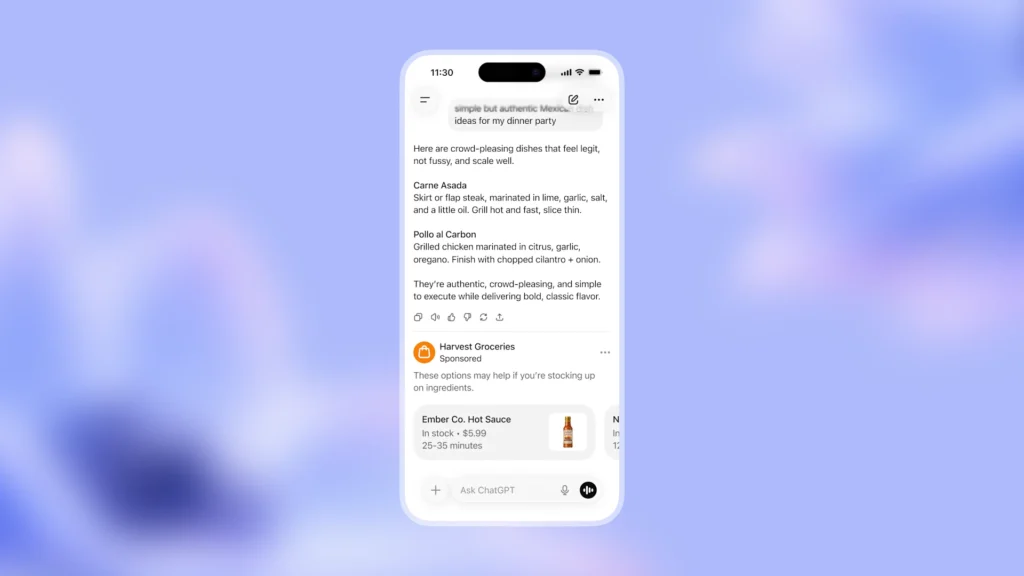
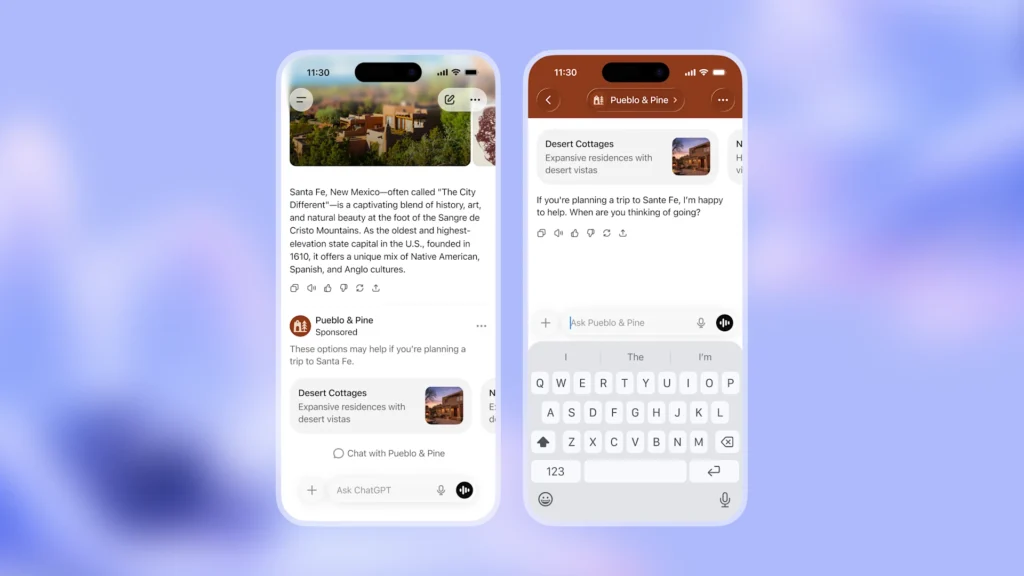
Ads in ChatGPT are going to be clearly labelled as ‘sponsored’ and they will not be served to users under the age of 18.
Here’s an example of what the ads may look like, from Open AI.
The future is AI Marketing
If ChatGPT truly becomes used by half the world’s population by 2030 (Altman’s own prediction), it will sit at the intersection of productivity, search, and conversation. That makes it not just a chat interface, but potentially the next major digital advertising frontier.
For businesses, the lesson is clear: start experimenting early. Learn how your brand’s voice, offers, and content fit naturally into conversational queries. And don’t wait for competition to drive ad prices sky-high.
The move toward ChatGPT Ads might feel like the end of an era, the end of an all-free, ad-free AI assistant, but it also signals a new phase in how we connect, recommend, and discover products online.
As with every major shift in digital media, the ones who adapt early stand to benefit the most.
Join our waiting list to be the first to access ChatGPT Ads >
This article was first published here: https://thebubbleco.com.au/chatgpt-ads-are-coming/
Explore Related Web3 SEO & GEO Strategy Insights
Your Token 2049 Planning Guide
Key Takeaways Start your Token2049 planning 4-6 weeks out. Personalised outreach and side event applications both need a long lead time. The best deals and…
AI Content Compliance in 2026: Copyright, Labeling, and the EU AI Act.
The intersection of content management and AI now sits at the center of a fast-moving set of ethical and legal questions, and content creators,…
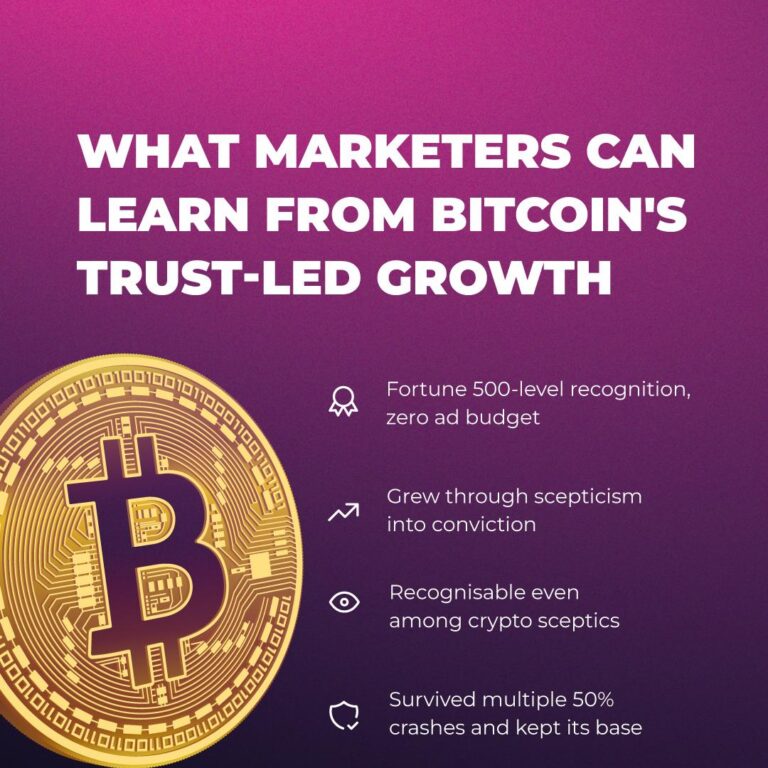
What Marketers Can Learn from Bitcoin’s Trust-Led Growth
Key Takeaways Bitcoin achieved Fortune 500-level brand recognition without a CMO, advertising budget, or commercials. The orange logo remains recognisable even among crypto sceptics and…
Apply to work with us
Step 1 of 2 — Your Details Almost there Question ${ quizStep } of 7
Tell us about yourself
${ q.hint }
${ q.question }
Is there anything else you'd like us to know?
${ quizCategory }
Your project has potential, but trust signals are thin. Before you scale marketing, you need to build the foundation. That's exactly what we help with.
You've got some trust building blocks in place, but there are gaps that could hold you back. The good news: this is fixable and we know where to focus.
You've built real credibility. The question now is: are you owning the narrative, or letting someone else define it?
We'll be in touch to share what we'd prioritise first.
You've been accepted for a Trust Strategy Call. We'll be in touch to book it.
Sending your results...
${ quizError }