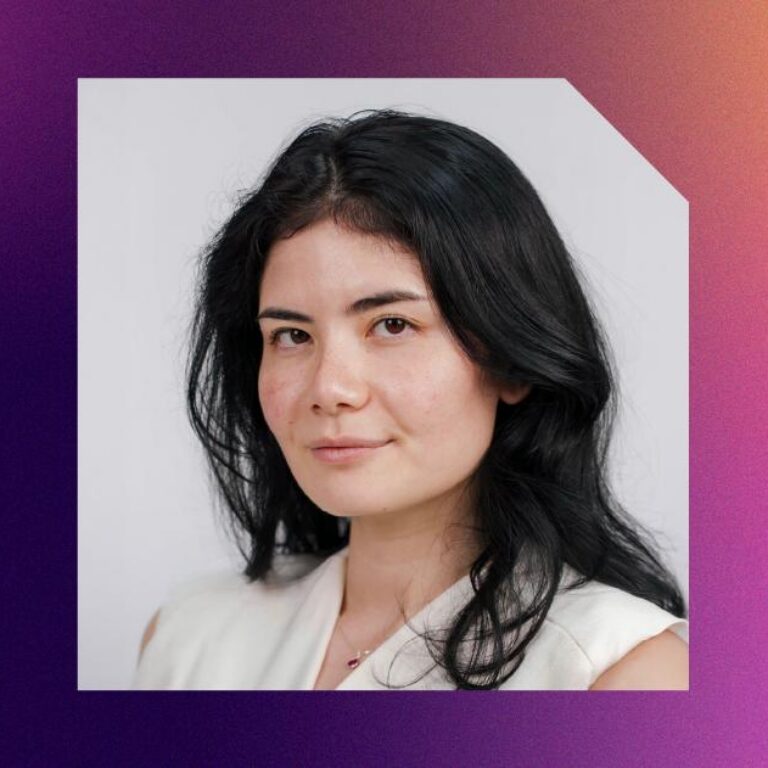
Faces of Web3
March 13, 2026
5
min read
Faces of Web3: Serena Dhanani Institutional Digital Assets
Serena Dhanani arrived in Web3 through one of the most traditional routes imaginable, from inside J.P. Morgan. Working in one of the world’s most established financial institutions, she became increasingly fascinated by the structural implications of blockchain, particularly for payments and capital markets.
When J.P. Morgan launched its own digital assets division, Serena saw her opportunity and applied internally the moment a role opened up. That transition marked the beginning of a career spent at the intersection of institutional finance and emerging digital infrastructure.
Her work has centred on building meaningful partnerships between traditional finance and the digital asset ecosystem, leading conversations around tokenisation, real-world assets, and institutional adoption with banks, asset managers, and trading platforms.
Serena’s perspective is shaped by a conviction that the decisions being made inside Web3 right now will define how capital moves for a generation. She brings a careful, structurally-minded lens to a space that often trades in noise.
How did you get started in Web3?
I first became interested in crypto personally while I was working at J.P. Morgan. As I learned more, I became increasingly fascinated by how blockchain could reshape financial infrastructure, particularly around payments and capital markets.
Around the same time, I discovered that J.P. Morgan had launched its own digital assets division, which felt like the perfect intersection of my traditional finance background and this emerging space. As soon as an opportunity opened up, I applied and transitioned internally.
That move marked the beginning of my Web3 journey, and I’ve been building in the space ever since.
What motivated you to move into Web3?
I was motivated by the opportunity to work in an industry that genuinely captured my curiosity and felt transformational.
As I learned more about blockchain and digital assets, it became clear that this wasn’t just another financial trend, it was a structural shift in how capital moves and how markets are built.
The idea of contributing to an industry that is still early, still being shaped, and still defining its long-term infrastructure was incredibly compelling.
What motivates me daily is the ability to work on forward-looking deals at the intersection of finance and technology, knowing that the decisions and partnerships being built now will influence how the ecosystem evolves and scales in the years ahead.
How do you define Web3?
Web3 refers to the next evolution of the internet built on blockchain, where users can own assets, control their identity, and interact peer to peer without centralised intermediaries.
In contrast, Web2, the internet most people are familiar with, is dominated by large platforms like Google, Meta, and Amazon, where users log in, generate data and content, but ultimately the platform owns and monetises that information.
What makes Web3 compelling is the shift in ownership. Instead of platforms controlling data and economic upside, users can directly own tokens, assets, and their digital identity. At a time when personal data has become heavily commoditised, this model of user-centric ownership is more important than ever.
What are the biggest societal opportunities Web3 brings?
In my view, Web3’s biggest societal opportunity lies in creating an open, programmable financial infrastructure that is globally accessible.
By enabling peer-to-peer value transfer through blockchain, it expands financial inclusion, increases transparency in markets, and allows assets like equities or real estate to be tokenised and traded more efficiently.
The industry is still very new and challenges remain, but Web3 has the potential to make financial markets more inclusive, transparent, and accessible at scale.
What is the biggest challenge the Web3 community faces?
In my opinion, the biggest challenge facing the Web3 community is balancing innovation with regulation. Too much regulation too quickly could stifle innovation, but too little clarity risks instability, reputational damage, and systemic risk.
The long-term success of the Web3 ecosystem depends on responsible builders who can bridge that gap, creating compliant, scalable systems that preserve the ethos of user ownership while integrating into the broader financial system.
What are some career highlights in your Web3 journey?
Some of my career highlights in Web3 have centered around building meaningful partnerships at the intersection of traditional finance and digital assets. Leading institutional conversations around tokenisation, infrastructure, and strategy, particularly with banks, asset managers, and trading platforms, has been especially rewarding.
I’ve also valued working on early-stage product expansion, helping shape how exchanges and blockchain ecosystems think about real-world assets and institutional adoption.
Being part of a space that is still evolving, and contributing commercially and strategically rather than just operationally, has been a defining and motivating part of my Web3 journey.
What inspires you to stay motivated professionally?
I’m genuinely energised by the work I do. It keeps me intellectually challenged and constantly learning, particularly in an industry that evolves as quickly as crypto. I’m fortunate to collaborate with exceptionally smart and driven people, which pushes me to think bigger and execute better.
The Web3 space is still relatively small, and through it I’ve built meaningful relationships and friendships.
That sense of community, combined with the pace of innovation, is what keeps me motivated and excited about the future.
When you’re not working, where would we find you?
I am always working, but if I’m not, I’m usually at a crypto event. If I’m not doing either of those things you’ll find me spending time with family and friends, travelling, or working out.
What motivates you to encourage more women into Web3?
The industry is so new and representation at this stage matters, the people designing the infrastructure today will influence access, governance, and capital flows tomorrow.
I believe greater female participation will lead to much stronger decision-making, better risk management, and more inclusive products overall.
Essential Advice for Women Entering the Web3 Space
My advice would be to lean into curiosity and not wait until you feel ‘fully qualified.’
Web3 moves quickly, and much of the space is still being shaped, so asking questions and getting hands-on early are real advantages.
Focus on building strong fundamentals, market structure, token economics, and risk, while finding a community or mentors who support your growth.
Confidence often follows action, not the other way around.
Throughout March 2026, Take3 is highlighting the journeys of women in the Web3 space as part of our Faces of Web3 series.
If this story resonated with you, or you would like to be part of the story, please get in touch with us at Take3.io.