Faces of Web3
Take3
October 24, 2025
14
min read
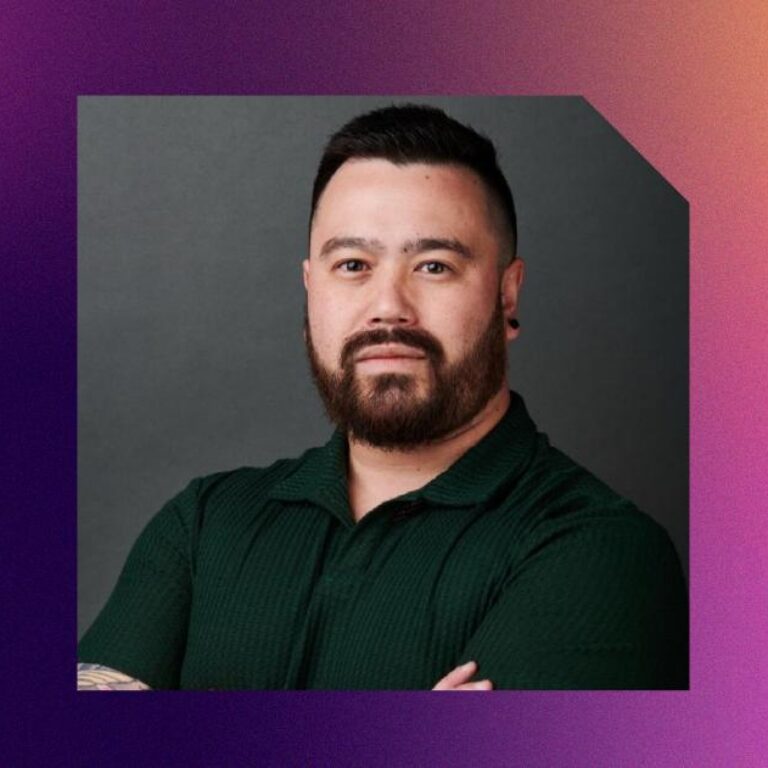
FACES OF WEB3: Mauricio Magaldi Suguihura, BlockDrops
Mauricio Magaldi is a true Web3 veteran, with more than a decade in the industry and a front-row seat to the evolution of blockchain from a conceptual breakthrough to a global movement. His journey began in 2014 after reading the Bitcoin white paper – an experience that sparked a deep curiosity and led him to explore Ethereum, smart contracts, and the transformative potential of programmable money.
From leading blockchain services at IBM to advising startups, hosting over 200 interviews on his BlockDrops podcast, and now building Midnight – a privacy-focused blockchain protocol – Mauricio has dedicated his career to shaping the decentralised future. His work bridges enterprise innovation with public blockchain ideals, always anchored in one core belief: Web3 is not just technology; it’s a paradigm shift toward self-sovereignty, ownership, and open participation.
In this feature, we explore Mauricio’s journey, his motivation behind founding BlockDrops, his vision for data privacy, and why he believes we are entering the most important chapter in Web3’s history.
How did you get started in the Web3 space?
I began my journey in the Web3 space 11 years ago, considering my entry when I read the Bitcoin white paper in 2014. Initially, it was driven by curiosity and personal study, as I worked in banking and couldn’t directly engage with digital assets professionally. I then encountered Ethereum and its concept of programmable money, which further piqued my interest.
In 2016, while working at IBM, I discovered that the company had a blockchain laboratory exploring corporate applications of the technology. I connected with this team, brought them to Brazil to engage with my clients, and subsequently received an offer to lead blockchain services for Latin America within IBM’s services division. This marked my professional entry into the blockchain space, focusing on enterprise (permissioned) blockchains while also keeping an eye on public networks. Since then, I have continued to work with blockchain as a consultant, builder, and advisor for startups.
BlockDrops is my passion project, and it’s where I talk to web3 people in the BlockTalks interview segment, and I do weekly updates on what’s going on in the world of blockchain, usually focusing on use cases, which I think is the easier way for people who are not initiated in the industry or in the tech to understand the power of blockchains in general.
That’s also one of the reasons why I’m building Midnight, to enable public blockchains to actually tap into proper privacy considerations. So, yeah, it’s been a long journey. I was really young when I started. But it seems to be accelerating more and more. So it’s also a privilege to be building the new era of the internet.
What was your motivator to found BlockDrops?
I worked at IBM as the first person to lead what they called blockchain services, back in 2016 up until 2019. After I left IBM, I didn’t want to lose touch with the crypto community, the blockchain community. I made a lot of friends there and I’m a big listener of podcasts myself, so I was looking for a podcast that would talk about use cases, what blockchains are used for, etc, but all I could find, especially in my native Brazilian Portuguese, was podcasts that would talk about “price go up”, “buy this token”, “sell this token”. And because I’m not a trader, that was of no interest to me, so I started my own podcast.
As I’ve been in music for a very long time, I know my way around a studio and audio, and I’ve been in the same band for almost 30 years now. So I said, you know what, how hard could it be to actually do my own podcast? And then I started BlockDrops, recording from inside my car, in my garage, every Sunday morning, as the garage traffic allowed.
It ended up being one of those things that you start without a lot of expectation, and it turns out that it’s just a door opener like nothing else.
The show evolved from being a weekly digest about blockchain for business to include a weekly interview segment – BlockTalks. Similar to this exercise, I profile builders on the show – we just crossed 200 interviews. I’ve had people from all stripes, from all sizes, all shapes and forms from pretty much every continent on the show by now.
And one of my joys is to meet people and connect with the people in web3. Web3 is for the people by the people. That’s the decentralization ethos, which I subscribe to. So it’s a lot of fun seeing the industry evolve over these six years I’ve been doing the show, talking to people who were heavily in one end of the industry, then seeing them evolve to a completely different end of the industry.
Some of them are evolving to become legends in the industry, which to me is another mark of the privilege that is to be building the decentralized internet, or the internet of ownership, as Chris Dixon puts well in his book.
I landed a job in London about three years ago because I was able to talk about crypto and financial services in the context of a medium like the BlockDrops Podcast, and that enabled me to carve my own space in the industry and hopefully build a little bit of a reputation to offer as a platform for other builders in the space. So I enjoy what I do really, really much and I can’t wait to see what the new waves of innovation in the industry and all the people that are coming in anew can build with these new sets of technologies.
Oh, and don’t even get me started on the intersection of AI and blockchain, because the things I’m seeing are pretty fantastic, I’m pretty sure we’ll see a lot of autonomous economy constructs being built in the next couple of years for probably the joy of many and the desperation of few, but it will be interesting to witness and hopefully help build that as well.
The definition of ‘Web3’ is quite broad and varies depending on the industry backgrounds of the people you speak to. How do you define the term? What do you determine to be the biggest societal opportunities that Web3 brings?
Web3 is a term that’s being thrown around willy-nilly, but I really like Chris Dixon’s definition of Web3, which is the Internet of ownership. He wrote that on the book Read, Write, Own, which is a great summary of how the technologies, the Internet, even the platform business models have evolved over the years and how the decentralized paradigm that the blockchains bring can help actually break the mold and then help push the value towards the edges.
I also really like the concepts that Charles Hoskinson of Cardano position, where blockchains allow society to rewrite social, economical, and political systems in ways that favor the majority of the people, because the current centralized ones are accumulation mechanisms for the ones that are already in power.
Blockchains are largely, if not the only, mechanism that an individual has to achieve self sovereignty, and it does so because it has a couple of elements that actually allow individuals to just do things and build things on their own: blockchains are open source, so anyone can actually contribute; they are permissionless, so anyone can use it; and they’re decentralized, so anyone can participate.
So you can just go do things and that’s really empowering. If you have an internet connection and a computer, there’s very little reason why you wouldn’t be able to benefit from something that really doesn’t care about who you are, it just cares about the value you bring and the value that you can accrue for the community. So that’s, I think, the biggest power of Web3.
That’s why I think we’ve seen a lot of surge in adoption for Web3 in developing countries. If you think about the balance, which the Chainalysis report shows very well, there’s a lot of sophistication on the use of Web3 applications and infrastructure in the developed countries, but the impact that blockchains and Web3 can bring to developing nations is insurmountable.
It’s without comparison much bigger in scale. It’s about financial stability, it’s about ownership, it’s about independence. So there are lots of real world examples on how Web3 can actually transform individual and collective lives without a lot, and that is one of the things that I feel, as we build the industry, we are responsible for. We need to ensure that this continues to be the pattern that will take us to this next level.
How do you define Web3 and its key societal opportunities?
I think that Web3 as a community, is faced with a deep ethical choice: do we embrace this new wave of institutional adoption and then accept that decentralization is just this theoretical definition? Or do we really embrace decentralization as a paradigm, not just another technology, not just another business model, and really push to revolutionize those social, economic and political systems in favor of those people at the edges?
Can these two things coexist? Maybe they can, but if we don’t continue to work for the decentralized ethos to become just how we understand society to work, then it’s almost like we’re replacing one technology by another. And the new technology is kind of slower, more expensive, and works as any other rail.
I think we’re starting to see these worlds kind of separate; you have the institutional adoption world and the web3 degen world. But I think on both ends, what we will see as a big challenge – because we’re basing all of these constructs of web3 in blockchains – is the challenge of data privacy.
Data privacy is a human right in the digital era.
The centralized platforms have benefited immensely from data. No big tech would be where they are if they were not exploiting data from all of us. And we’ve kind of normalized it, but I think that there are things coming into the horizon, like the project I’m associated with, Midnight, that will allow us to use public infrastructure, a blockchain, but still remain in control of our own data through zero-knowledge cryptography and things like that.
So I think this is something that will force us to remind ourselves that we were once private citizens and we can work towards that and reclaim some of that privacy in this new era as well. Those are, I think, huge challenges and unfortunately, we don’t see a lot of this conversation because again, we’re so excited about the new IPO, the new ICO, the valuation, and we over-financialize the discussion, but ultimately, blockchains are about the data and how we handle data determines how sovereign we are. And I think this is a conversation that desperately needs to happen.
What are some career highlights in your Web3 journey?
I guess the fact that I’ve been in the industry for 11+ years is a highlight in and of itself, because it’s been a lot of hard work. Especially in the early days it was like “this is crazy stuff, nobody will understand this, what are you talking about decentralization for?”
So to me, I think resilience could be considered a highlight.
But there’s also some pieces of work that I’m really satisfied that I was able to contribute to.
I did consulting work for regulators to help them understand what the decentralized paradigm is, what the technologies are, what can and cannot be built using them, and what is in it for them as regulators, which I think is something that most conversations really don’t touch on.
I do advisory work for early stage startups. I’ve been with TuneTraders for five or six years now. They are a music royalties tokenization platform in Brazil that is turning itself into a fintech. Very interesting.
I work with Midnight on the on-chain privacy, using zero-knowledge proofs. Being also a former chief data officer and a crypto enthusiast, this kind of merges the two worlds into one, and it’s important in the discussion for self sovereignty.
There’s also a few reports that I wrote. Two of them are very special because they were the ones that I worked with when I landed in the UK. One was the 11FS report, “How Web3 is shaping the future of finance”. A lot of it is still current, a lot of those promises are being confirmed. So I’m really happy that we put that effort in.
And another one was the “Digital payments powering transformation in the UK and beyond” with the Whitechapel Think Tank, It was one of those discussions about the role of blockchains, but also the role of regulators in making sure that resilient payment systems are available for the protection of the individual and the nations. And we’re going to see this becoming increasingly more important. So I think there are a couple that I feel are representative
But also the show. The fact that I was able to talk to so many great people in the industry for these many years. My very first interview was with a former mentor of mine at IBM, Nitin Gaur, now a close friend. I had the chance to talk to people that I admire even though I don’t see eye to eye on a bunch of matters. And that made me probably a better interviewer or even more complete in the analysis that I can do on a regular basis on the show.
So it also goes to show how people are willing to have interesting conversations, even if they don’t agree with you, in a civil manner, which is so lost in the online discourse these days. So I’m proud of those, and more than proud, just thankful that this has been my life in the last 11 years.
What’s coming up for you and your business in 2025?
So for next year, we’re looking to continue to build and ship Midnight. This is one of the things that – again – I feel is necessary. Midnight is novel in how it is implementing zero-knowledge proofs for data protection on a decentralized space.
If you are a person that is concerned about state surveillance or surveillance in general, private or public, I think it’s worth taking a look at what we’re bringing to the market, which is rather unique. I’m excited to continue to do the work with BlockDrops and having more people on BlockTalks. I’m trying to work on a new segment called Deep Dives, where I will grill founders on their business and technology choices.
That is something that I really like to do, get a little bit deeper under the hood. Because one thing is to do a profile of a person, which is kind of more conversational. The other one is to investigate “why did you choose this?” “Why does your revenue model look like that?” “What’s the valid traction points on what you built?” “How can people actually benefit from it?” “What’s the user experience you’re trying to improve?”
My goal with Deep Dives is to be able to answer “why should people care about your project or your platform or your protocol?”, and then go below the surface and allow them to argue and rationalize and justify those answers.
These are conversations that I don’t necessarily see happening, but every time I’m on a panel somewhere, I try to poke and probe and make sure that we bring light into things that are not necessarily discussed. We should be more open about it, so Deep Dives are something I’m excited about.
All in all, I’m just excited to see how regulators in different jurisdictions actually accommodate the new wave of innovation. I’ve been calling this out probably since 2021, that crypto regulation would become a geopolitical battleground and this is exactly what we’re seeing now.
It doesn’t have to end in a battle, but it does have to end in better regulation. Not more regulation, Not less regulation, Just better, appropriate regulation, so not only the incumbents can break into these new possibilities, but also that the degens can safely do their degenning and we can coexist in harmony using the very same infrastructure for different purposes.
What inspires you to stay motivated professionally?
I think that part of my motivation comes from the sheer privilege that is to work in this industry. If I get to do this, why not do it and do it well? I think that’s kind of the context in which I try to operate. I keep trying to equate what it probably felt like in the late eighties when they were coming up with the internet. Things that were never possible now are possible and the novelty of that. In the late eighties, nobody would ever think that the internet would become what it became. And I think right now we’re probably approaching 90, 91 on web3. So we’re approaching the era of the GeoCities of that period. At least that’s how I feel things like decentralized naming systems look like currently.
We’re going to see a lot of UX improvements as the internet saw, and security improvements as the internet saw. So it’s going to be interesting, and it feels magical. It feels like this is a “history rhymes” type feeling where I was a beneficiary of the early days of the internet because I’m that old. Now building web3 feels pretty much like that and that’s what keeps me going.
I think this time is going to be looked back upon as one for the history books, not just in the Web3 industry, but I think the whole world as well. I think there are a lot of changes going on and I think Web3 is a big driver of that change for sure.
If you think about how the internet reinvented information exchange, crypto/blockchain/ web3 are, at least for now, reinventing how money is seen as a technology rather than this kind of ethereal definition, and I think it is an important discussion.
I’m saying this because again, we’re in the overfinancialized stage of this era, as we were with the dot-com bubble. Don’t get me wrong, we’ve been through this before, but not in this deep way in which even programmable money is a significant change in how we perceive money.
So this is a privilege, but it’s also a big responsibility because some of the choices we’re making now, they can just stay and have endless repercussions until something comes along and replaces it, that’s why I feel that the challenge of welcoming incumbents, but also keeping the decentralized ethos, is kind of where we need to focus so we don’t make mistakes.
When you’re not working, where would we most likely find you?
I enjoy spending time with my family. I enjoy doing my CrossFit workouts. If you follow me on LinkedIn, you’ll see Saturday, Sunday posts are usually weightlifting of some kind. So yeah, I’m super into that. And metal concerts. One of the benefits of living in London is that every one of my favorite bands at some point comes down to play in the city.
In the three years I’ve been here, I’ve seen more bands that I wanted than in the previous 40 plus years I lived in Brazil, because they never make it there. Underground Swedish black metal bands are not going to cross the ocean to Brazil and play for 20 people, but when they come to London, there’s like 5,000 people that know them and want to see them play, so it makes it more economically viable, which I totally appreciate and keep coming. I had many big-man-crying moments in concerts here because these are things that I’ve been listening to for over 20 years, and all of a sudden I have the opportunity to see them live really close to retiring. So it’s fun, but it’s also emotional sometimes. It obviously has a bearing because I’ve been playing drums for the same band for 30 years. So, you know, music speaks really loud in the things that I like.
For more information and to keep up to date with what Mauricio is doing on LinkedIn. For everything BlockDrops, you can stay connected on X, Instagram, & LinkedIn.
If Mauricio’s stories have inspired you and you’re craving more Web3 insights, dive into our exciting “Faces of Web3” series via our blog!